Journal Issue
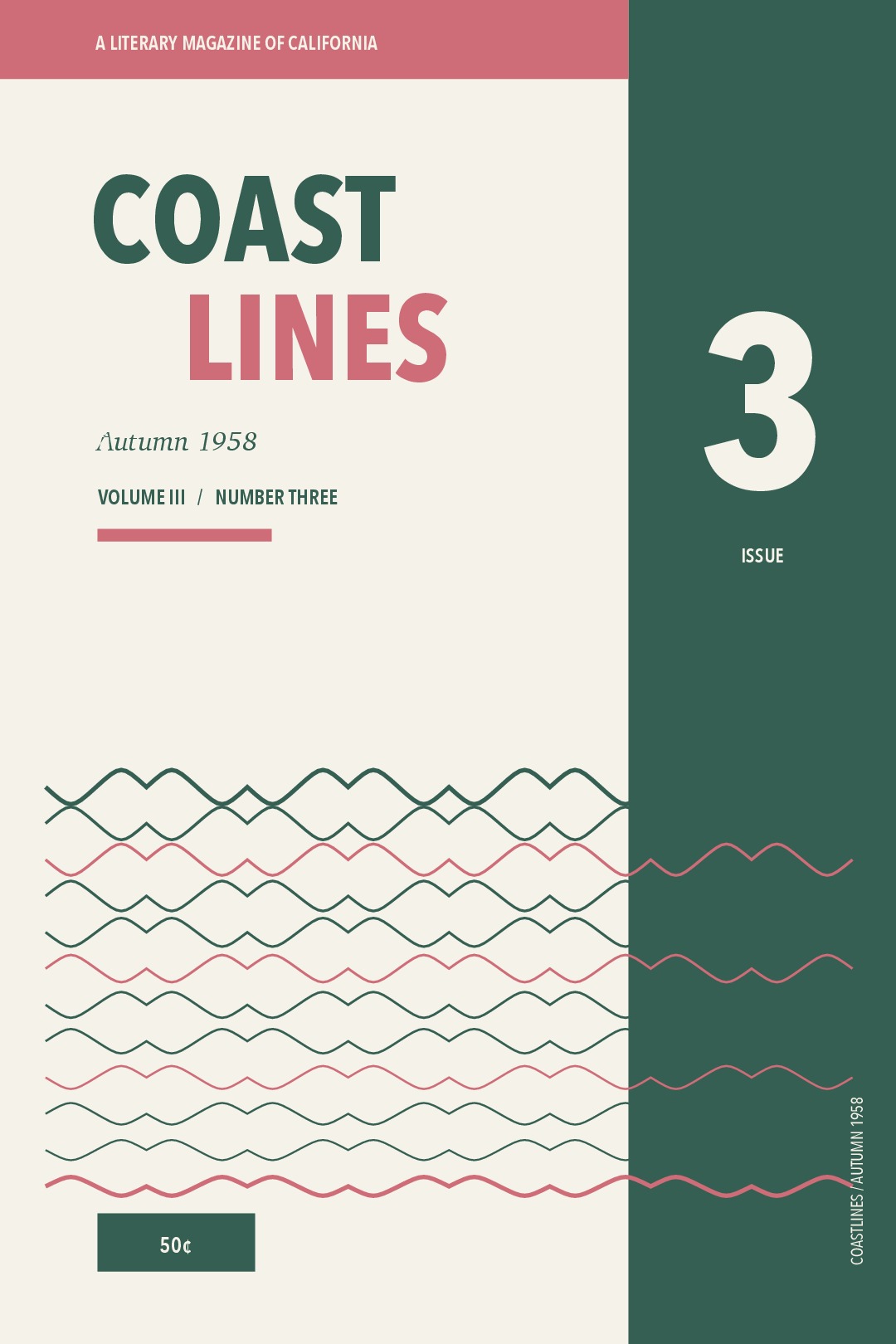
Coastlines, Vol. III, No. 3 (Autumn 1958)
The End of an Era gives this issue its argumentative center, with Martin Tucker setting the terms.
View edition →Extremes and Moderations: A Historical Archive of Los Angeles and Southern California Poetry
Browse complete issues, journal-derived anthologies, and research indexes. Each record opens to an individual reading page with contributors, contents, publication details, and PDF access.
Journal Issue
The End of an Era gives this issue its argumentative center, with Martin Tucker setting the terms.
View edition →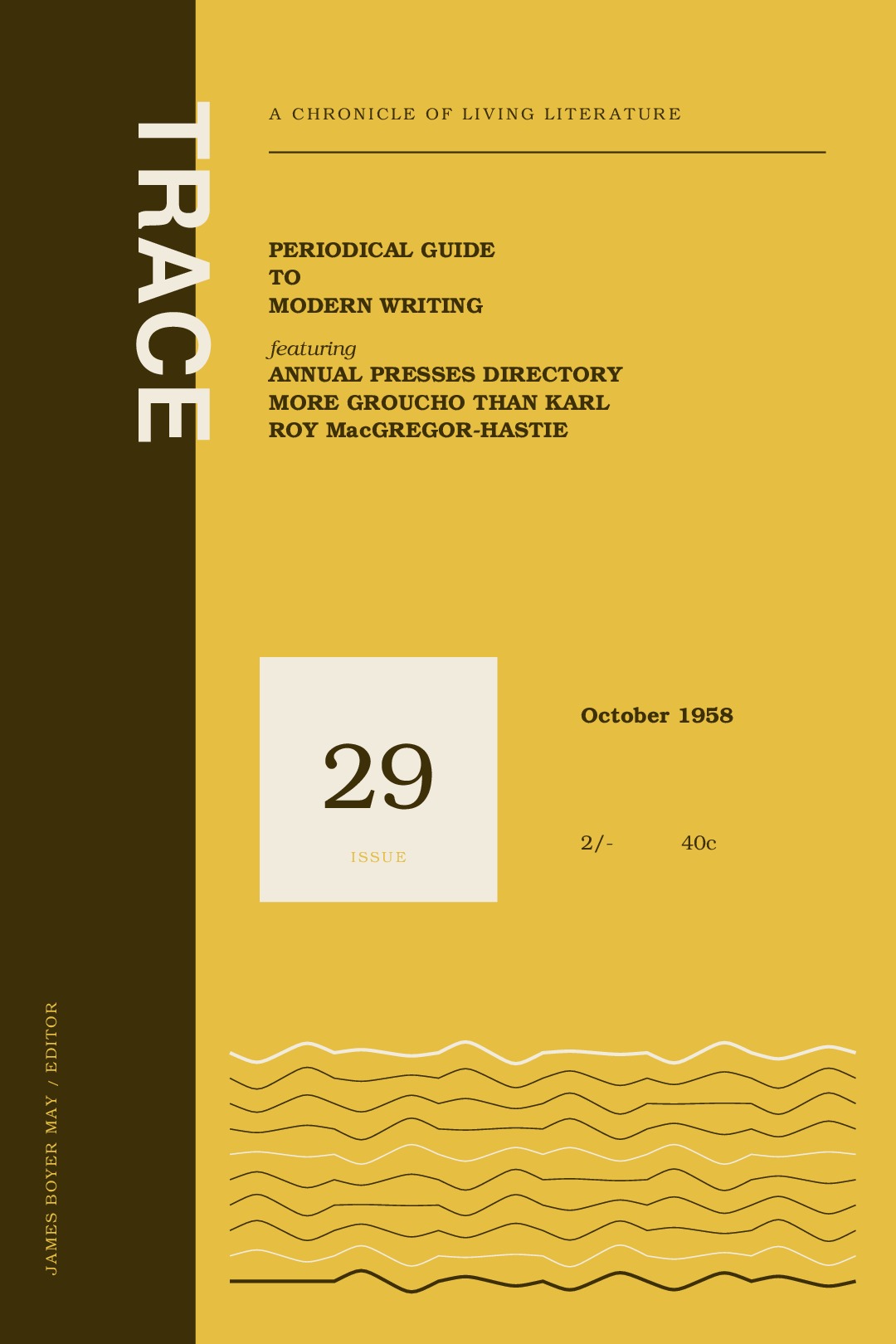
Journal Issue
More Groucho Than Karl by Roy MacGregor-Hastie gives Trace no. 29 its clearest point of entry, while Towards Print by James Boyer May and Posterity Is Kinder Than the Critics by David Gunston widen the issue’s field.
View edition →
Journal Issue
Vent de Mai and Femme Immolée give the issue a strong interest in water and weather.
View edition →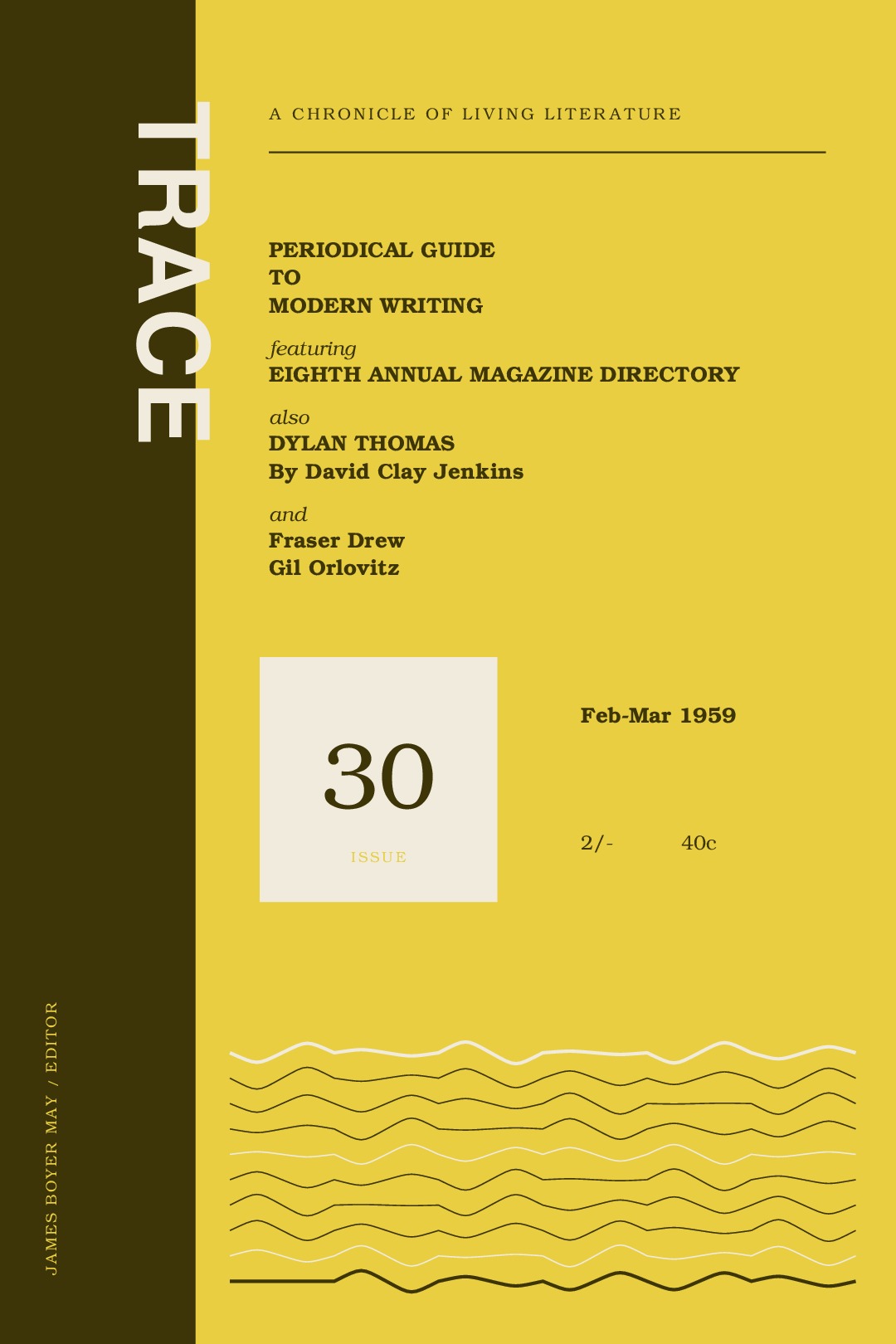
Journal Issue
Dylan Thomas and Wales Magazine by David Clay Jenkins gives Trace no. 30 its clearest point of entry, while A List of Dylan Thomas’s Contributions to Wales and Towards Print by Gil Orlovitz widen the issue’s field.
View edition →
Journal Issue
Jean Follain’s 6-poem run, from Glaneuses to Marée, gives this issue its clearest formal center.
View edition →
Journal Issue
The Function of Criticism Reviewed gives this issue its argumentative center, with Peter Yates setting the terms.
View edition →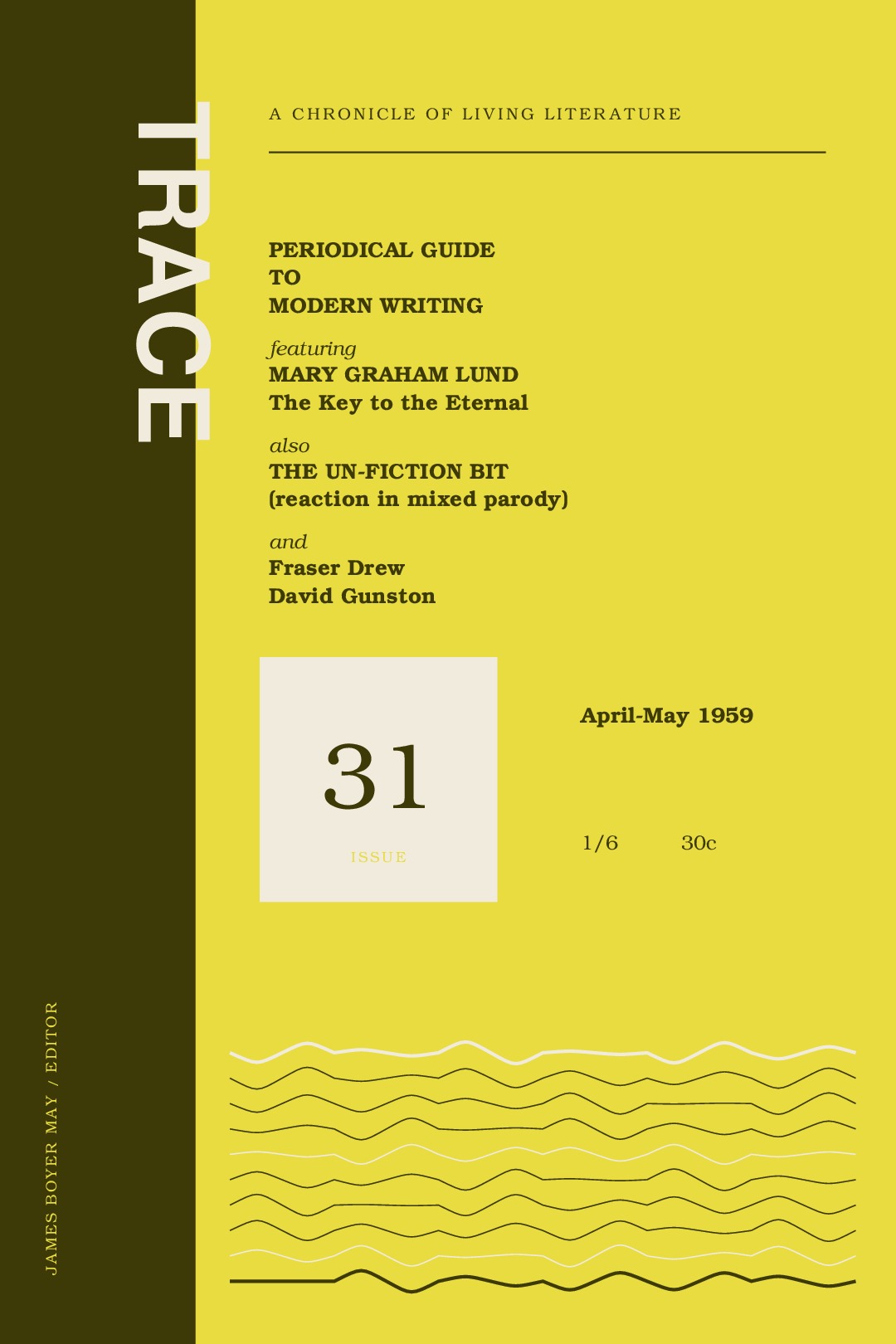
Journal Issue
The Key To The Eternal by Mary Graham Lund gives Trace no. 31 its clearest point of entry, while Calling for a re-evaluation of James Franklin Lewis by Mary Graham Lund and Towards Print by James Boyer May widen the issue’s field.
View edition →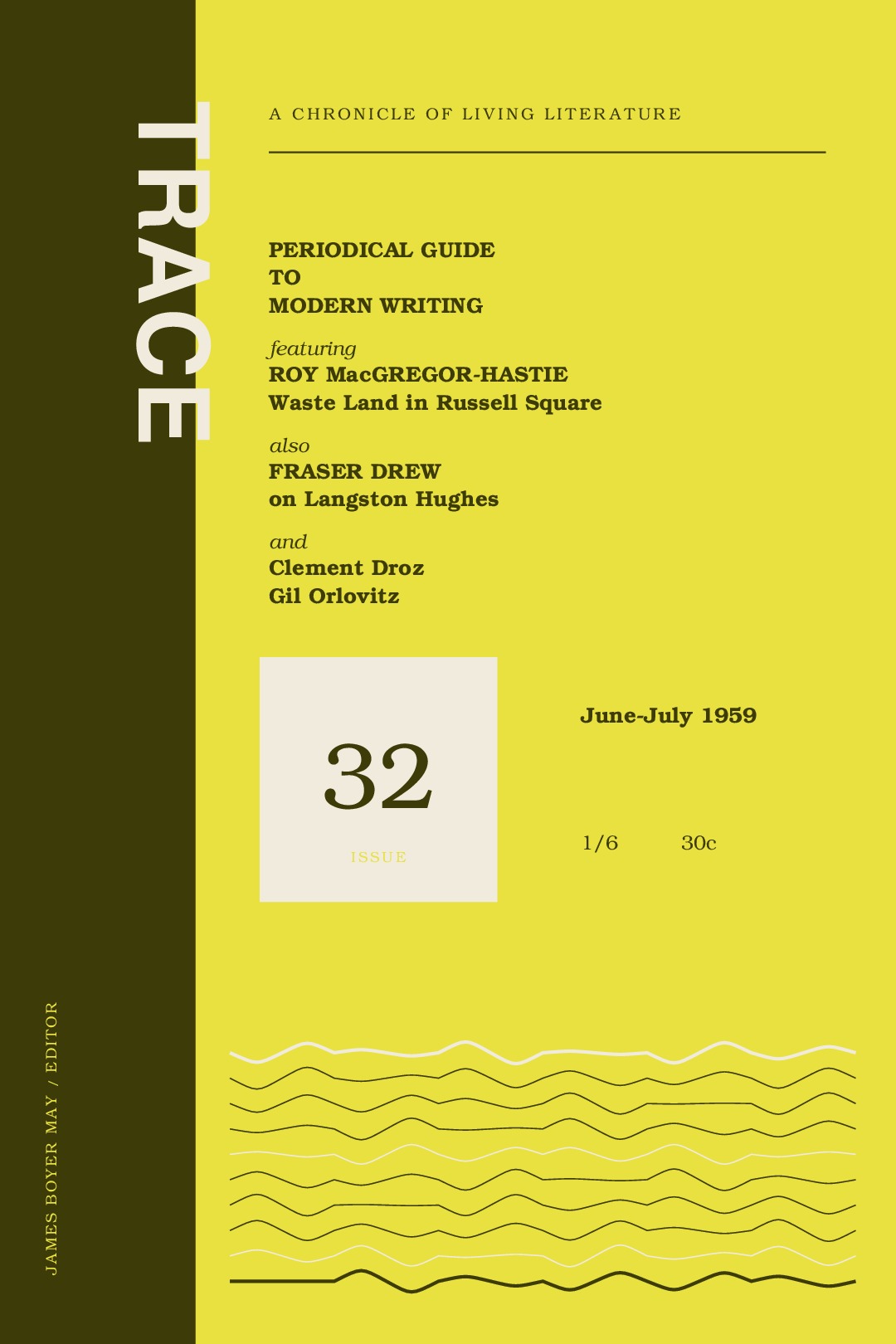
Journal Issue
Waste Land in Russell Square by Roy MacGregor-Hastie gives Trace no. 32 its clearest point of entry, while Towards Print by Gil Orlovitz and (The Manholes of Pity : a Dialog) by Gil Orlovitz widen the issue’s field.
View edition →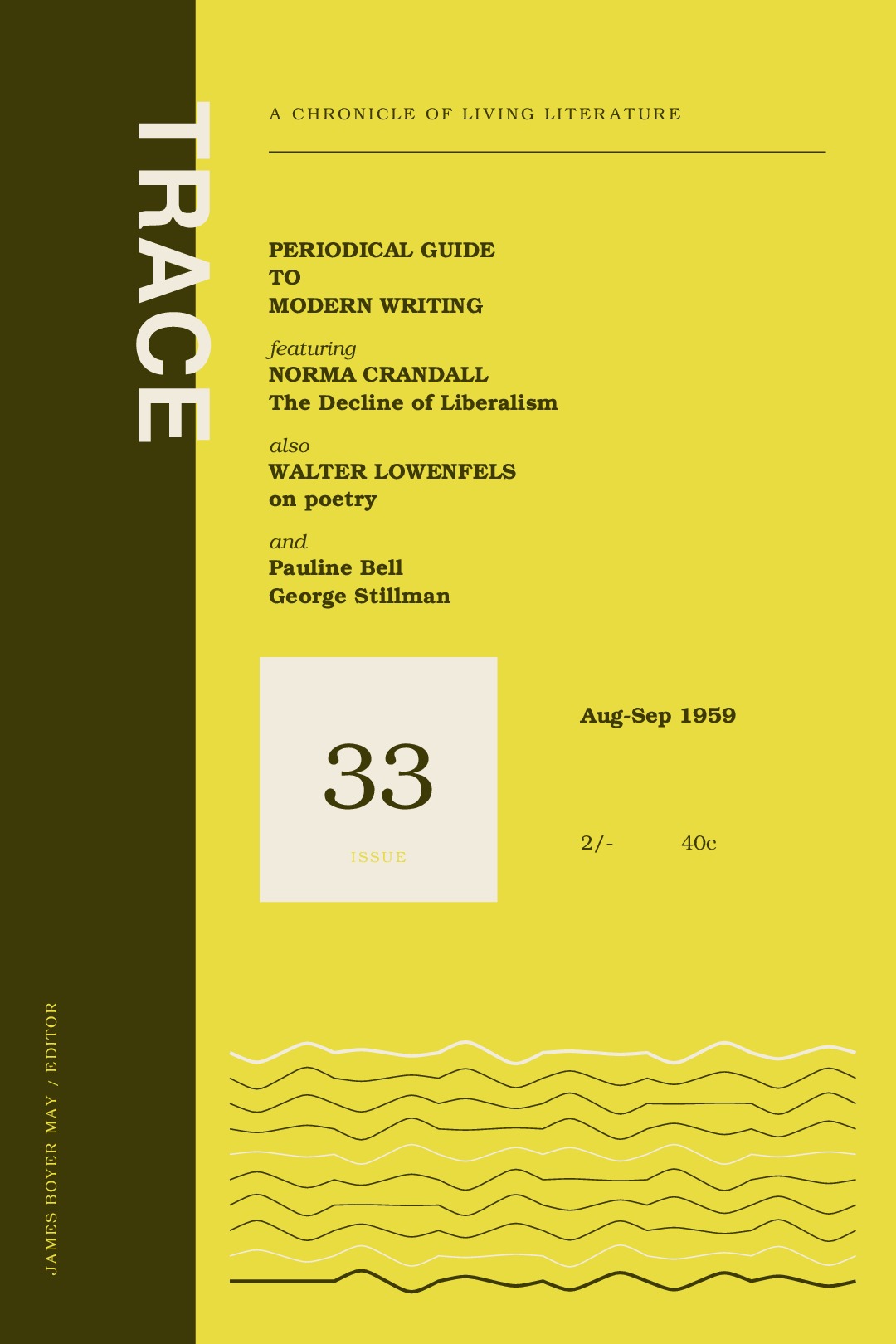
Journal Issue
The Decline of Liberalism and of the Modern Novel by Norma Crandall gives Trace no. 33 its clearest point of entry, while Towards Print by Gil Orlovitz and (The Qualification) by Gil Orlovitz widen the issue’s field.
View edition →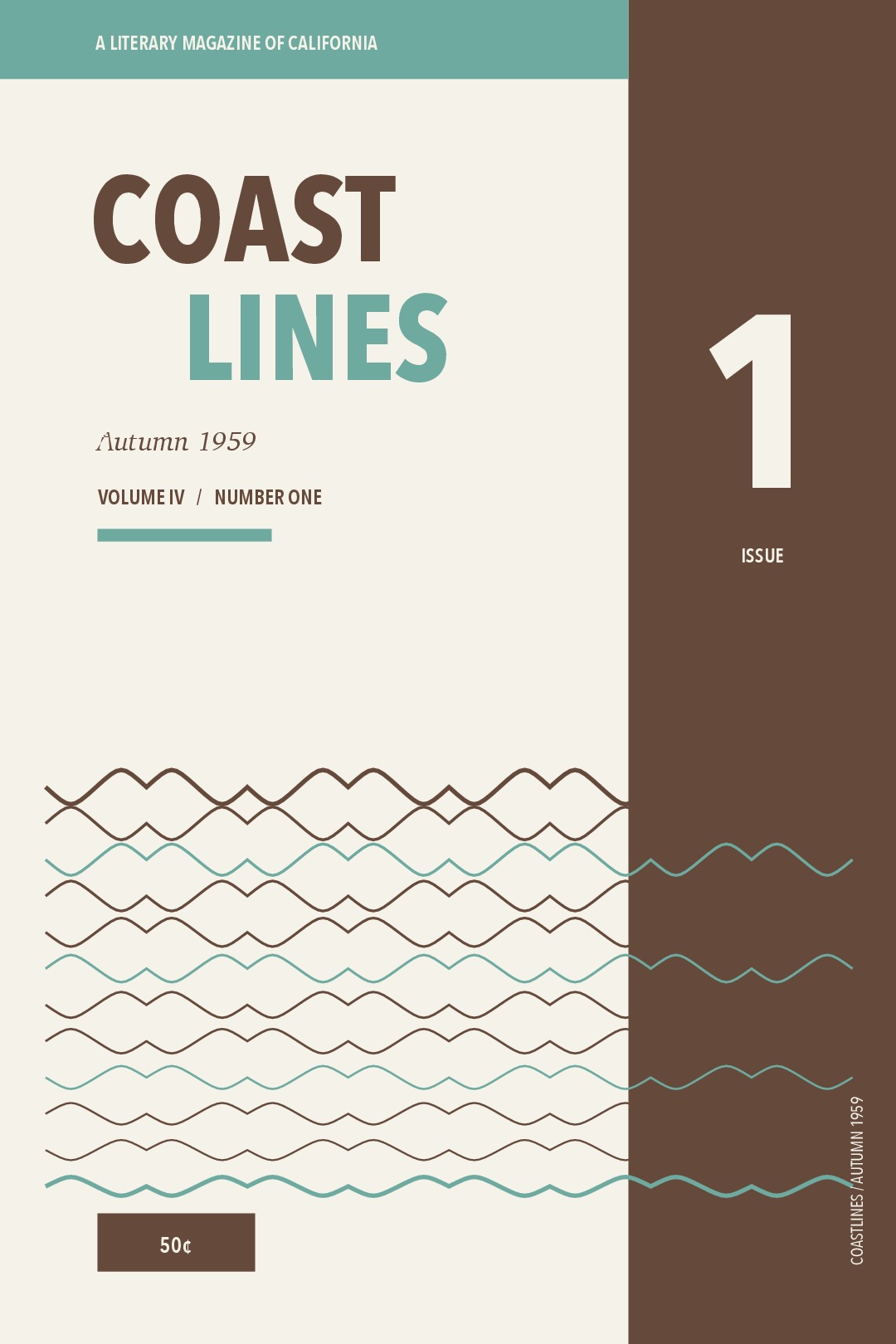
Journal Issue
The Great Promoter gives this issue its argumentative center, with Gene Frumkin setting the terms.
View edition →
Journal Issue
Story of Universe Inside Me by Lawrence Barth gives Trace no. 34 its clearest point of entry, while The Experience of Self-publishing by Lawrence Barth and Towards Print by Gil Orlovitz widen the issue’s field.
View edition →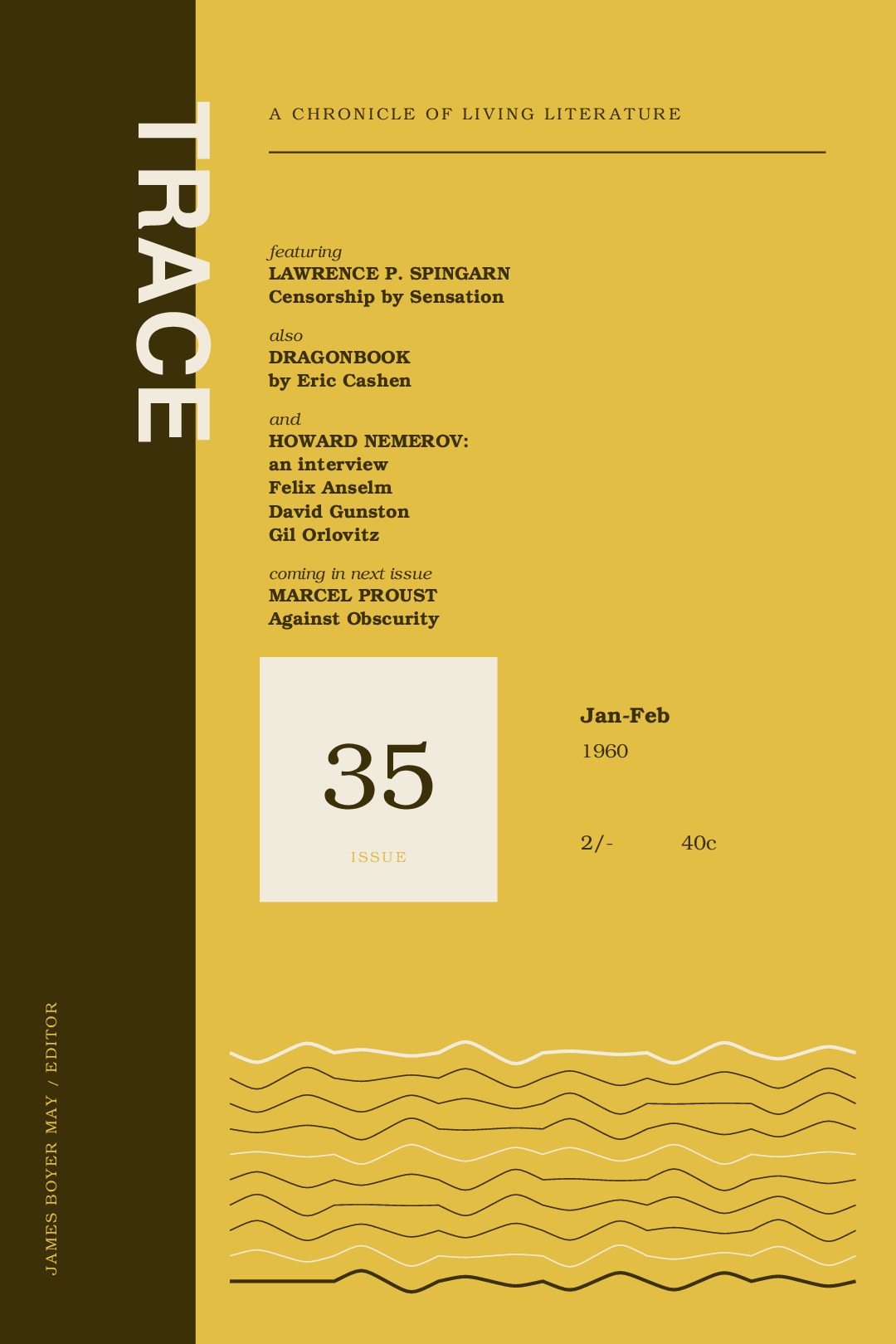
Journal Issue
Censorship by Sensation the Case Against Publishers by Lawrence P. Spingarn gives Trace no. 35 its clearest point of entry, while Dragon Book by Eric Cashen and The International Guide widen the issue’s field.
View edition →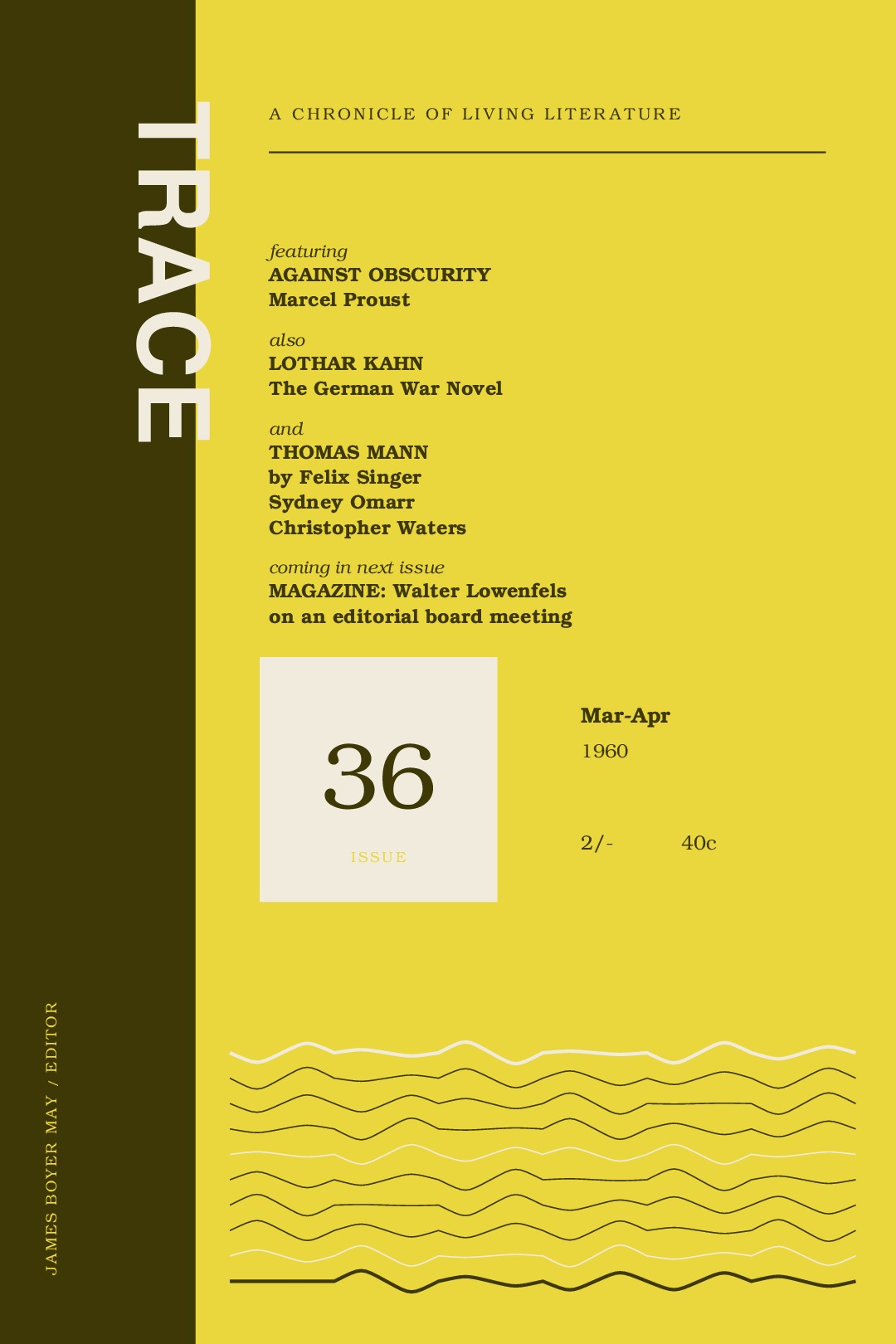
Journal Issue
Obscurity by Marcel Proust gives Trace no. 36 its clearest point of entry, while Against by Marcel Proust and Note by the Translator by Christopher Waters widen the issue’s field.
View edition →
Journal Issue
The Non-Existent City gives this issue its argumentative center, with Lachlan MacDonald setting the terms.
View edition →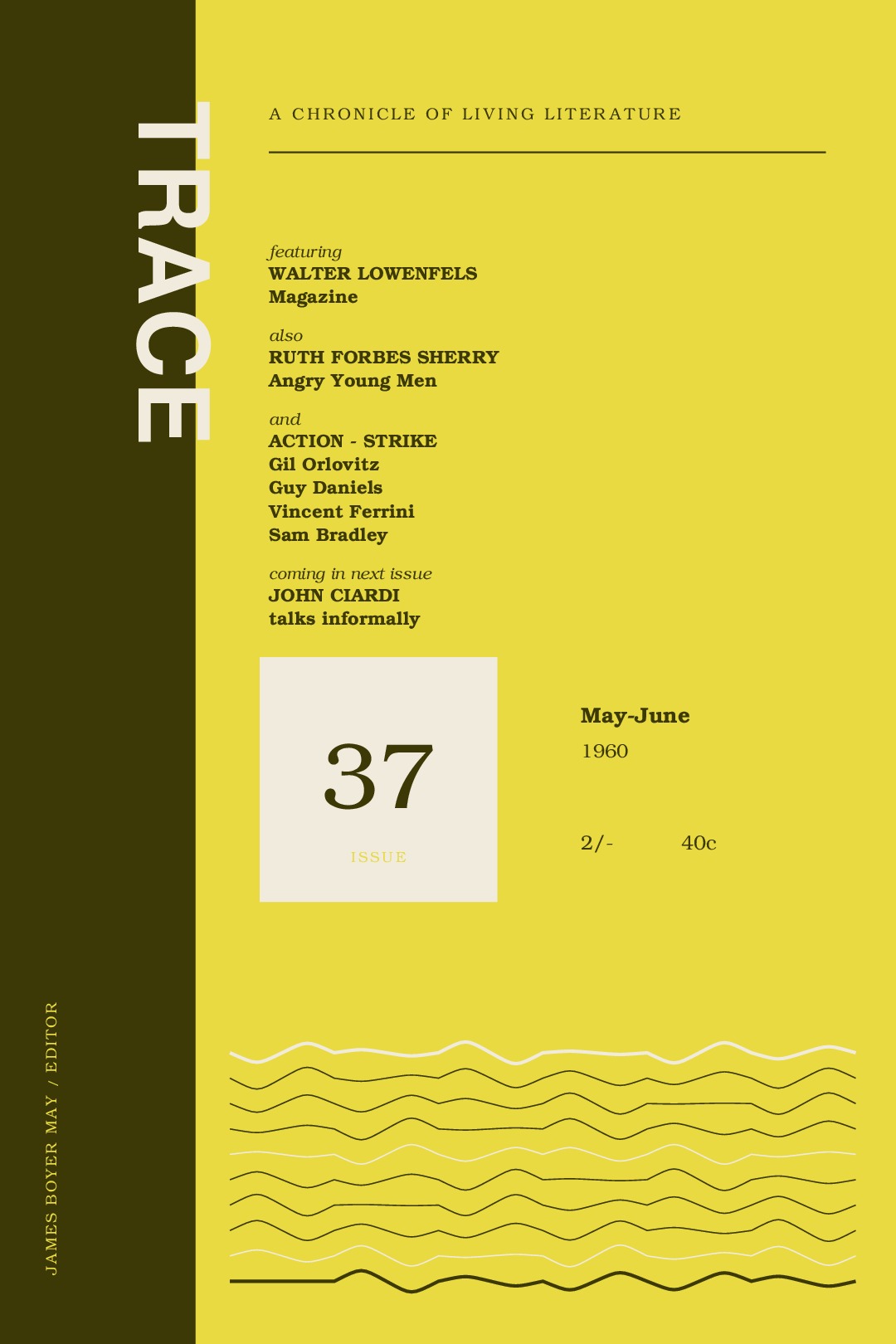
Journal Issue
Notes on an Editorial Board Meeting by Walter Lowenfels gives Trace no. 37 its clearest point of entry, while To Appear in Trace No. 38 and Towards Print by Gil Orlovitz widen the issue’s field.
View edition →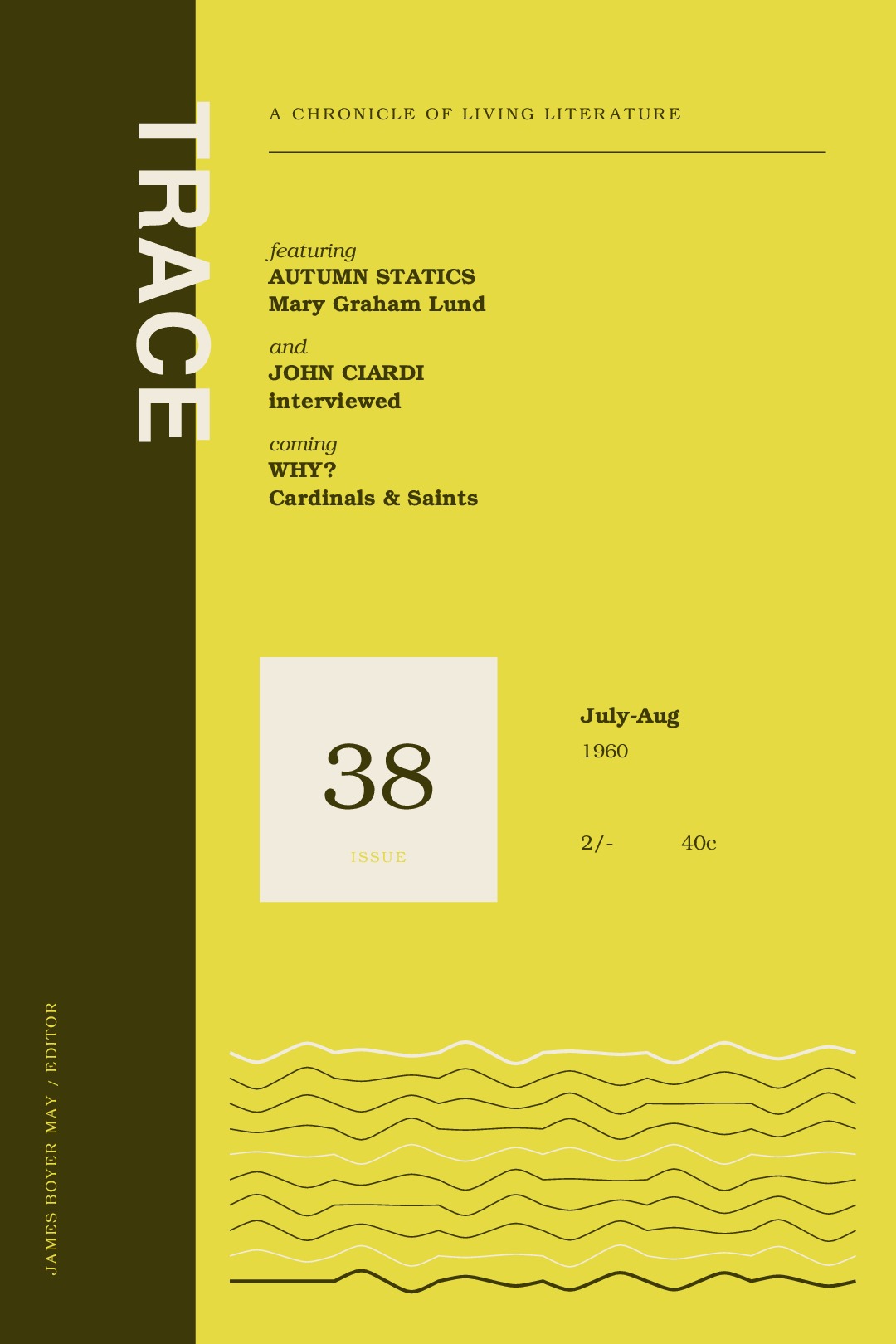
Journal Issue
Autumn Statics by Mary Graham Lund gives Trace no. 38 its clearest point of entry, while To appear in Trace No. 39 and Why widen the issue’s field.
View edition →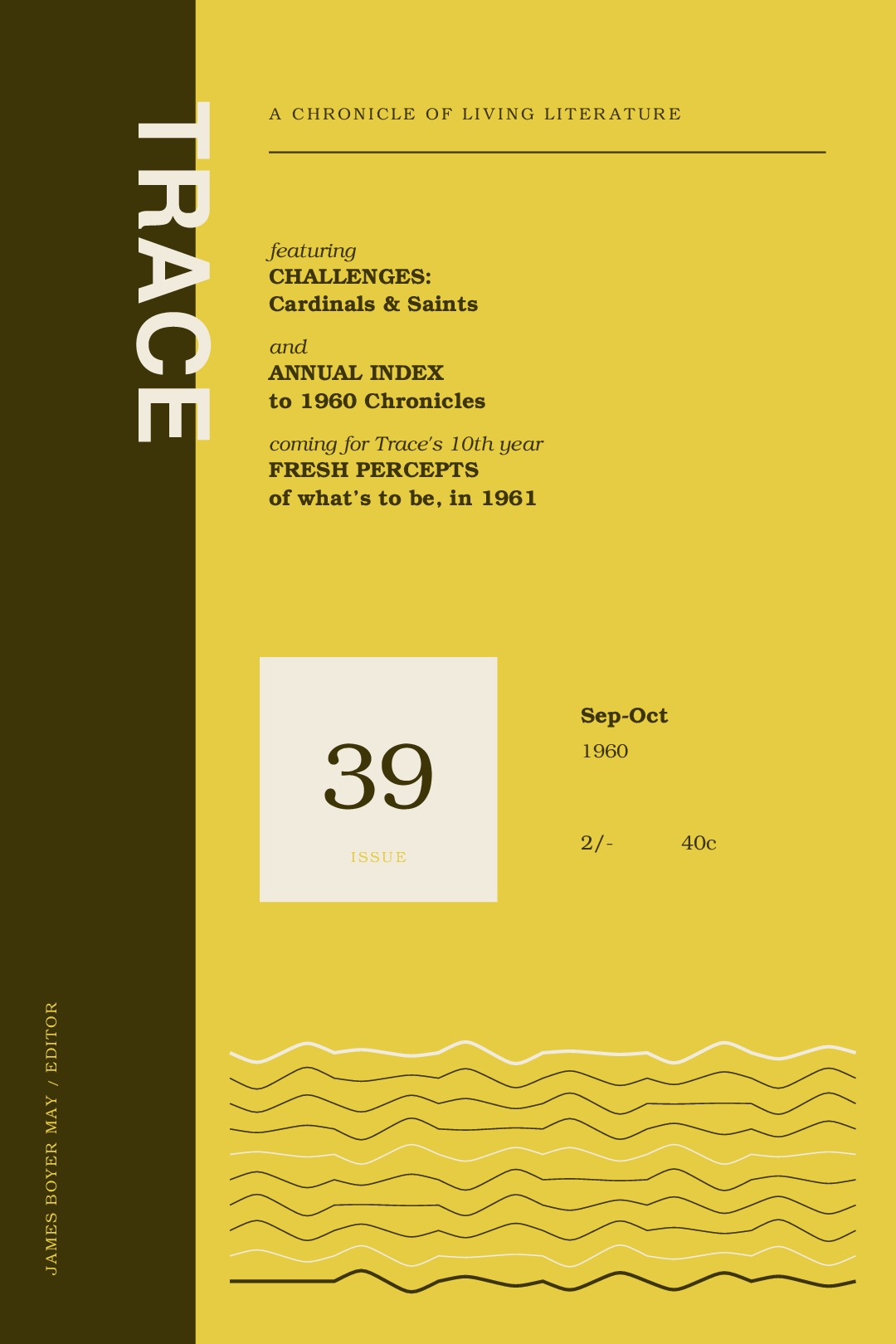
Journal Issue
Why? and Cardinals & Saints by Arlene Zekowski and Stanley Berne gives Trace no. 39 its clearest point of entry, while In/ Sert by First Person and First Person widen the issue’s field.
View edition →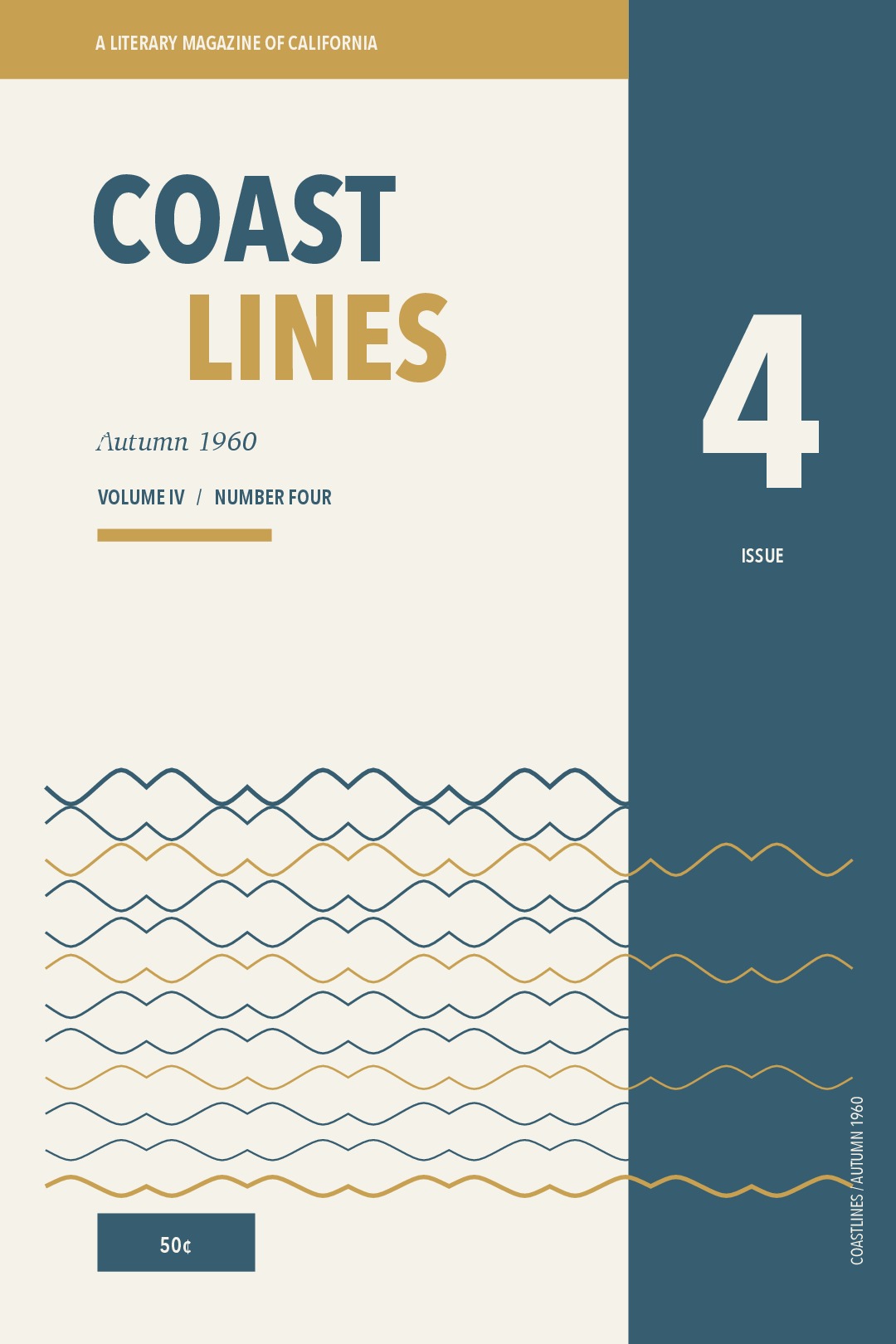
Journal Issue
Fragment gives this issue its argumentative center, with Christopher Perret setting the terms.
View edition →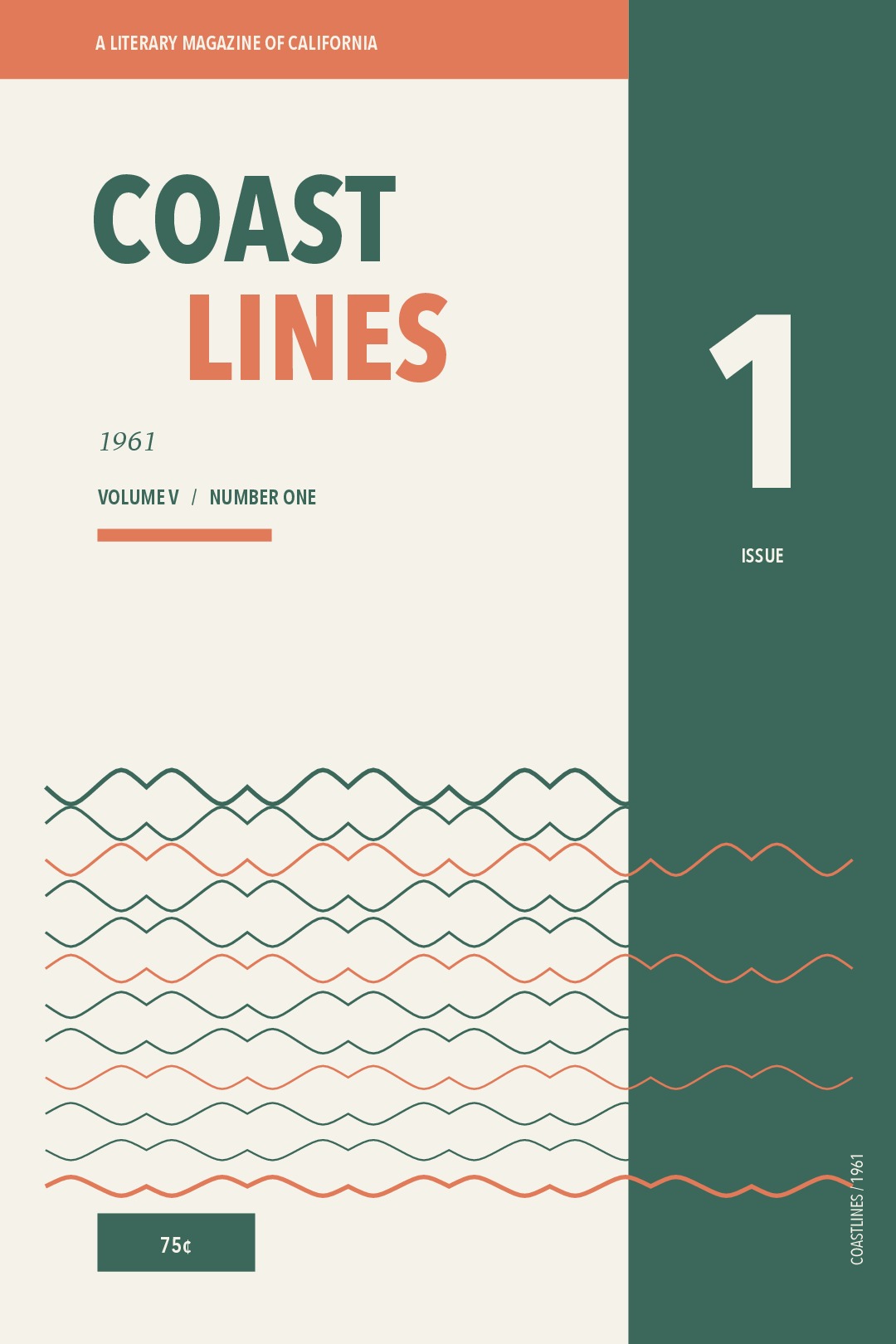
Journal Issue
The Hollywood Image gives this issue its argumentative center, with Kingsley Widmer setting the terms.
View edition →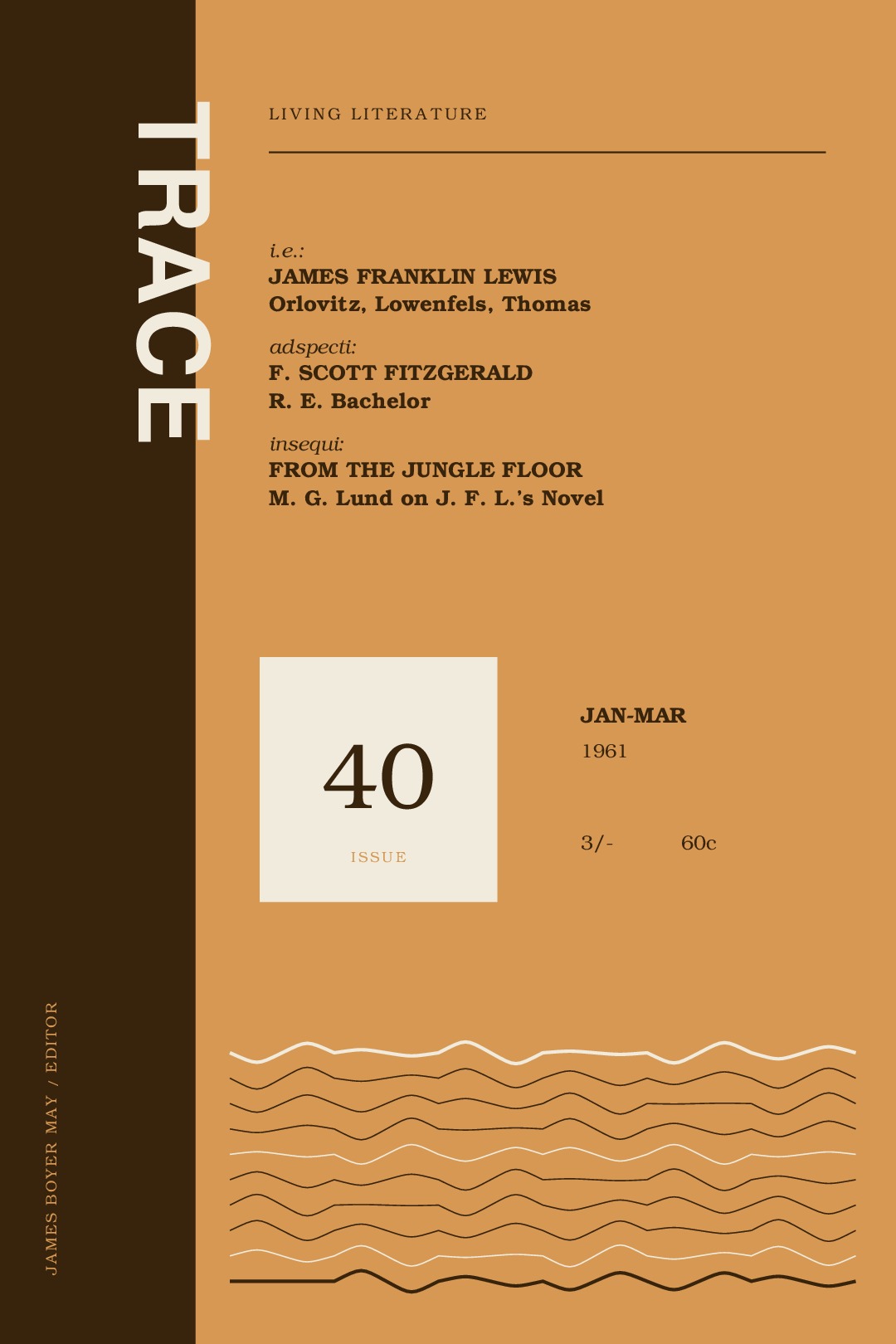
Journal Issue
Carillon gives Trace no. 40 its clearest point of entry, while The Weft of Experience in F. Scott Fitzgerald by R. E. Bachelor and Towards Print by Curtis Zahn widen the issue’s field.
View edition →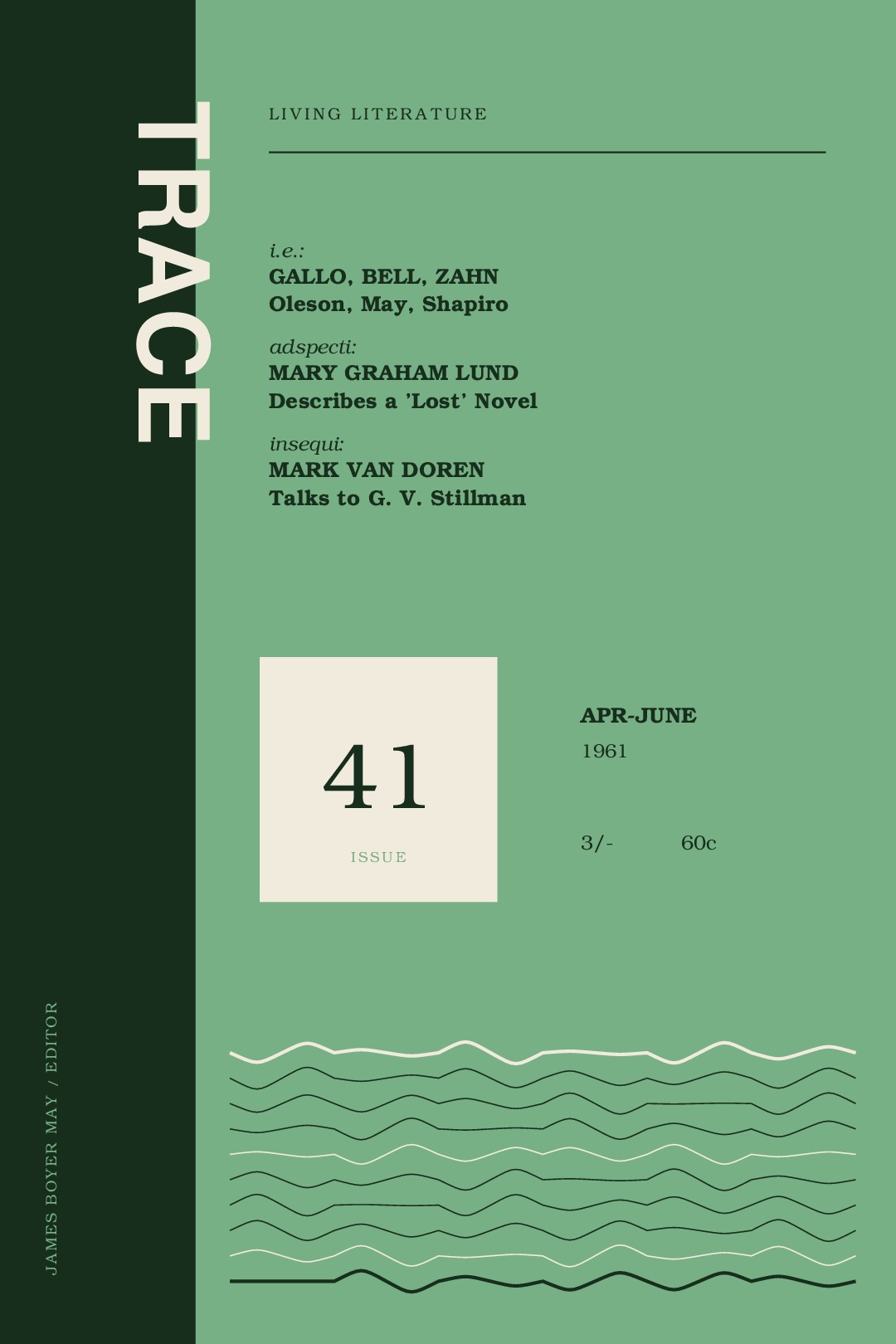
Journal Issue
From the Jungle Floor by Mary Graham Lund gives Trace no. 41 its clearest point of entry, while Towards Print by James Boyer May and The Co-Created Light by Alfred Dorn widen the issue’s field.
View edition →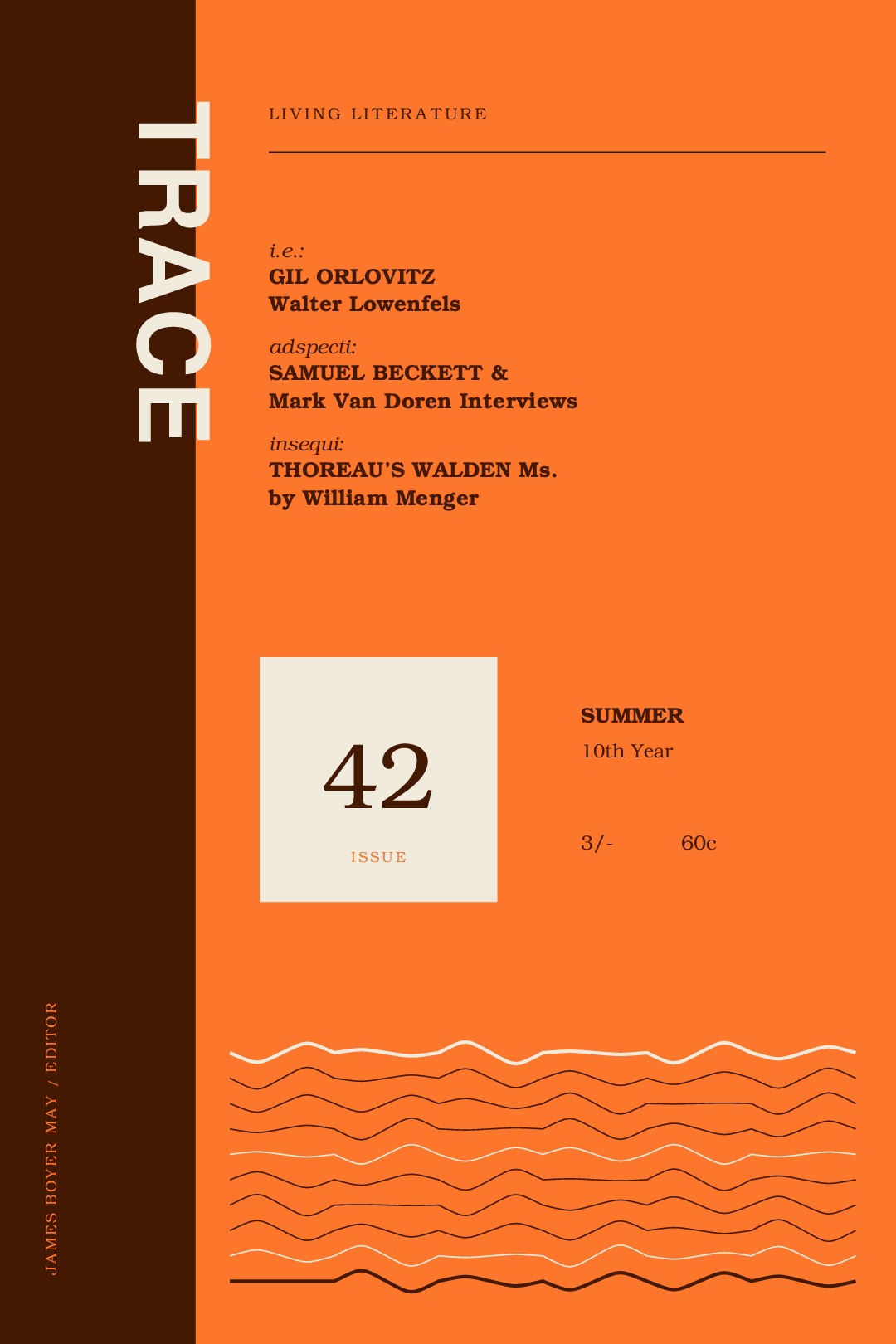
Journal Issue
Talks to G. V. Stillman by Mark Van Doren gives Trace no. 42 its clearest point of entry, while Towards Print by James Boyer May and Selected from Epigrams for a Poetry Workshop by Lewis Turco widen the issue’s field.
View edition →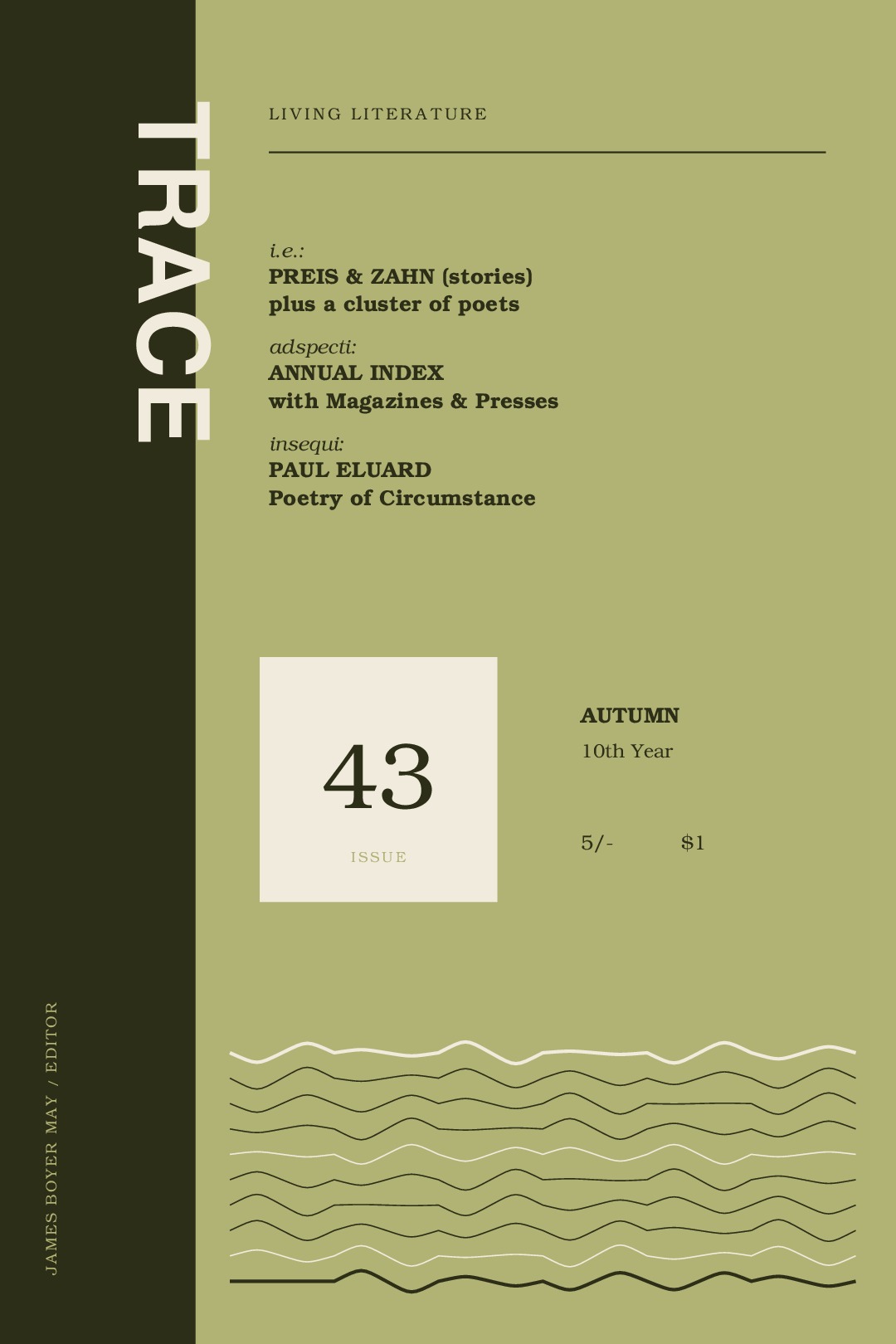
Journal Issue
Thoreau’s Walden Ms gives Trace no. 43 its clearest point of entry, while Towards Print by Curtis Zahn and *(. . .
View edition →
Journal Issue
Art and the Artist gives this issue its argumentative center, with Miller Williams setting the terms.
View edition →